BEAR SEEKING COOL /
BÄRIN SUCHT ABKÜHLUNG
A participatory staged-photography project about trees, shade and shared habitat in Mannheim
Lorem ipsum dolor sit amet, consectetur adipiscing elit. Ut elit tellus, luctus nec ullamcorper mattis, pulvinar dapibus leo.
PROPOSAL: Idea and Approach
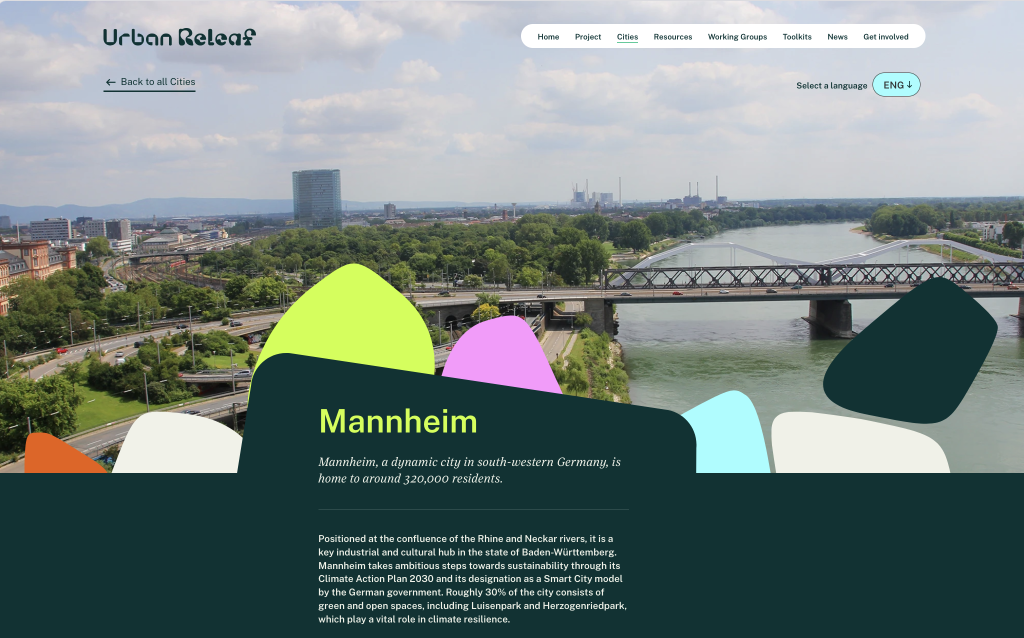
BEAR SEEKING COOL / BÄRIN SUCHT ABKÜHLUNG is a participatory staged-photography project responding to Urban ReLeaf Mannheim’s work on urban trees, public-space comfort, and citizen-generated environmental knowledge.
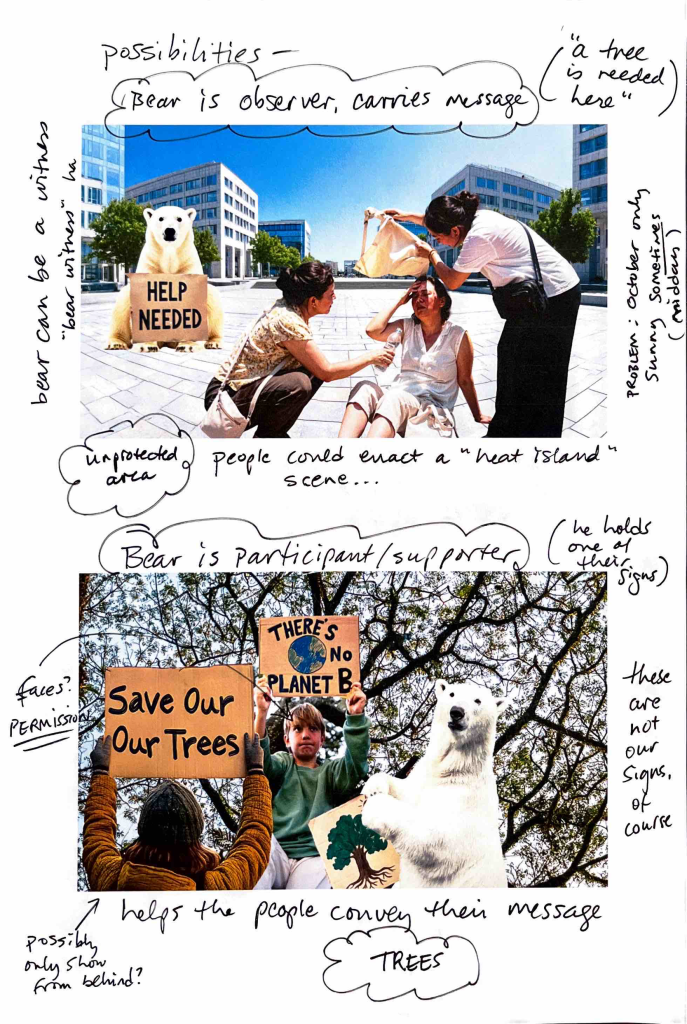
A polar-bear-human hybrid arrives in Mannheim carrying a bilingual classified advertisement:
BEAR SEEKING COOL / BÄRIN SUCHT ABKÜHLUNG
Seeking: shade, water, trees, places to rest, and local guides.
Tired of appearing as a familiar symbol of distant climate catastrophe, she comes hoping to be useful: to listen, learn from residents, and lend visibility to their calls for a cooler, greener city. Her threatened Arctic habitat is not equated with Mannheim residents’ experience of urban heat. Instead, she invites questions about what makes a changing city liveable: Where do you find relief? Which tree matters to you? What would you protect? What does the map not know? Where is more shade needed?
In consultation with Urban ReLeaf and participating residents, I will select up to six Mannheim sites. Each encounter will begin with a specific Urban ReLeaf entry point: a recorded or updated tree, a public-space-comfort observation, a contrast between shade and exposure, or a question arising from available data. The selected sites may include a valued mature shade tree, a young or vulnerable tree, a heat-exposed public space, a place of relief, or a participant-nominated location. The photographs will be made in October but will address remembered and anticipated summer heat, inviting viewers to imagine how these places will feel when July returns.
Participants will develop hand-drawn bilingual signs as a recurring visual element. For example:
THIS TREE MATTERS.
DIESER BAUM IST WICHTIG.
ESPECIALLY IN JULY.
BESONDERS IM JULI.
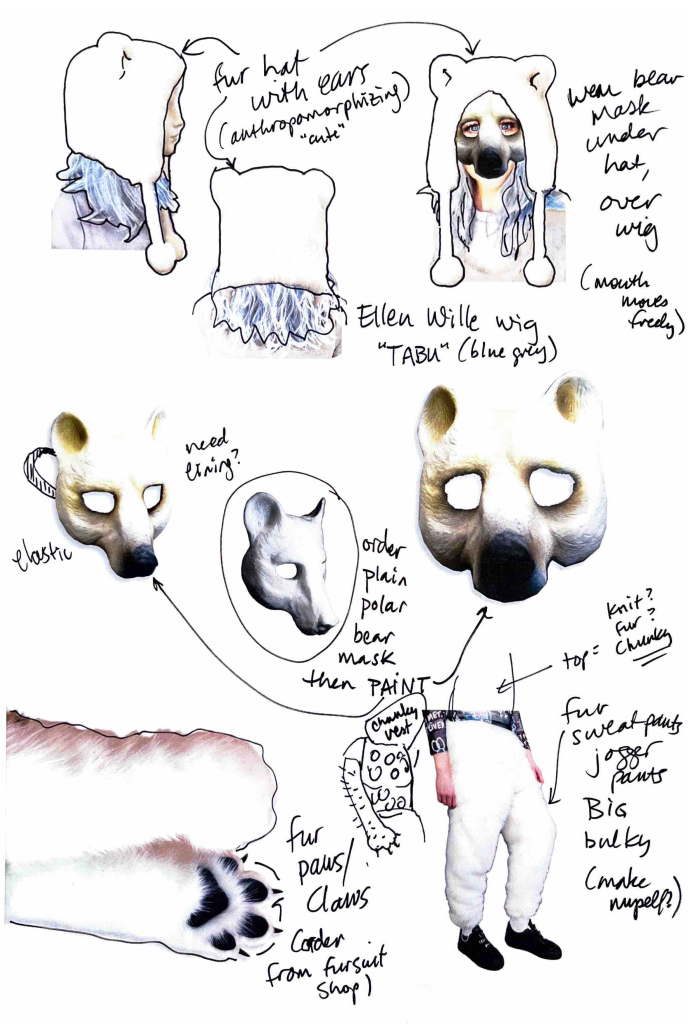
The bear will be realised through a visibly constructed hybrid performance costume, combining specialist-made elements with reused clothing and self-made details.
Community Involvement
The project will be developed with participants as co-authors, not as illustrative subjects. Recruitment and site selection will be planned with Urban ReLeaf Mannheim in ways that respect data protection and do not depend on access to identifiable app users. Urban ReLeaf may circulate invitations through appropriate channels, while local partners can invite residents beyond the existing app community.
Participation will involve one facilitated co-design session and a small number of site-based encounters. Participants can identify sites of relief or discomfort, suggest locations, and co-develop signs and photographic scenes. A small group will co-author up to six staged encounters; appearing in the images is optional.
The process will prioritise low-threshold participation, accessible meeting formats, and perspectives of people especially affected by urban heat. Contributions may be anonymous, and all photography, sound recording, and participant text will be consent-based.
Creative Outputs
The main outcome will be a lightweight, adaptable public installation for Mannheim’s Technical Town Hall.
Up to six staged photographs, each with a compact bilingual site panel combining a location marker, an Urban ReLeaf data reference, and a participant phrase or hand-drawn proposition.
Hand-drawn bilingual signs incorporated into the photographic scenes.
An optional looping slideshow with site sound, where venue conditions allow; the artist can provide a compact television screen and playback system if required.
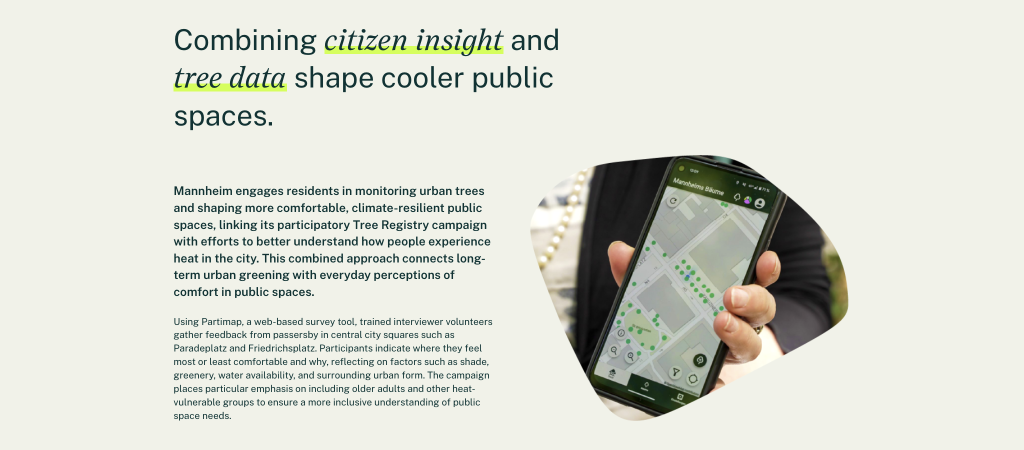
A bilingual visitor prompt, potentially using a map or noticeboard, inviting tree stories, requests for shade, and, where appropriate, engagement with the Urban ReLeaf tree registry.
A locally recruited student assistant will support encounters, participant welcome and accessibility, sound gathering, production, and installation. Materials will be reusable, borrowed, or recycled wherever possible.
Legacy and Longer-term Impact
The project will leave a reusable bilingual resource rather than only a temporary exhibition. With appropriate consent, photographs, site texts, and the map can be shared through Urban ReLeaf’s Mannheim and European communication. The classified-ad format, questions, and sign templates can be reused in future Urban ReLeaf tree-registry events, workshops, libraries, schools, and neighbourhood activities.
Rather than promising a direct policy outcome, the work makes the care, attention, and lived experience behind environmental data visible, while creating a shared language for asking what a cooler, greener, and more equitable Mannheim requires.
Participation + Urban ReLeaf data + co-authorship
The project makes selected Urban ReLeaf data points publicly encounterable, and invites situated interpretation of the observations, care, and local knowledge that citizen-generated data can contain. In other words, I am not trying to represent the whole dataset; I am tracing a small number of citizen-generated entry points from record to encounter to public image.
- The project will be developed with participants as co-authors, not as illustrative subjects.
- Participants identify sites of relief or discomfort, suggest locations, and co-develop signs and photographic scenes.
- Given the project’s short delivery period, timely support from Urban ReLeaf and its local partners in circulating invitations and connecting the project with relevant community networks will be essential to meaningful participation.
Outputs + Budget + Practical Feasibility
- I imagine a lightweight, adaptable installation in the Technical Town Hall:
- up to six staged photographs, each with a compact bilingual site panel;
- hand-drawn signs within the images; and, if the venue allows, a short slideshow with site sound.
- I would also like to include a simple visitor prompt that could invite tree stories, requests for shade, and, where appropriate, a route back to the Urban ReLeaf registry.
- For that part especially, I would value Urban ReLeaf’s guidance on suitable anonymised data references and on the most appropriate way to connect visitors to the app or registry.
Timeline
5–9 October 2026
- Introductory meetings with Urban ReLeaf and local partners; review available data; agree recruitment routes, access needs and preliminary sites
- Create polar bear costume
10–16 October
- Invitation circulated; facilitated co-design session and initial site-based encounters (**need location in Mannheim!); collect site suggestions and participant responses
17–25 October
- Confirm up to six encounter sites with participants and Urban ReLeaf; create staged photographs and gather site sound
26–30 October
- Edit photographs; prepare captions, map, signs and slideshow; confirm participant approvals; local printing and installation preparation
31 October–
1 November
- Install the public exhibition at Mannheim’s Technical Town Hall
2–6 November
- Documentation, evaluation, participant/partner feedback and handover of agreed digital materials
Closing thoughts
There are many possibilities for how the images can look—whether the bear is an active participant in the scene or is simply an observer and a messenger (“bearing witness”)